
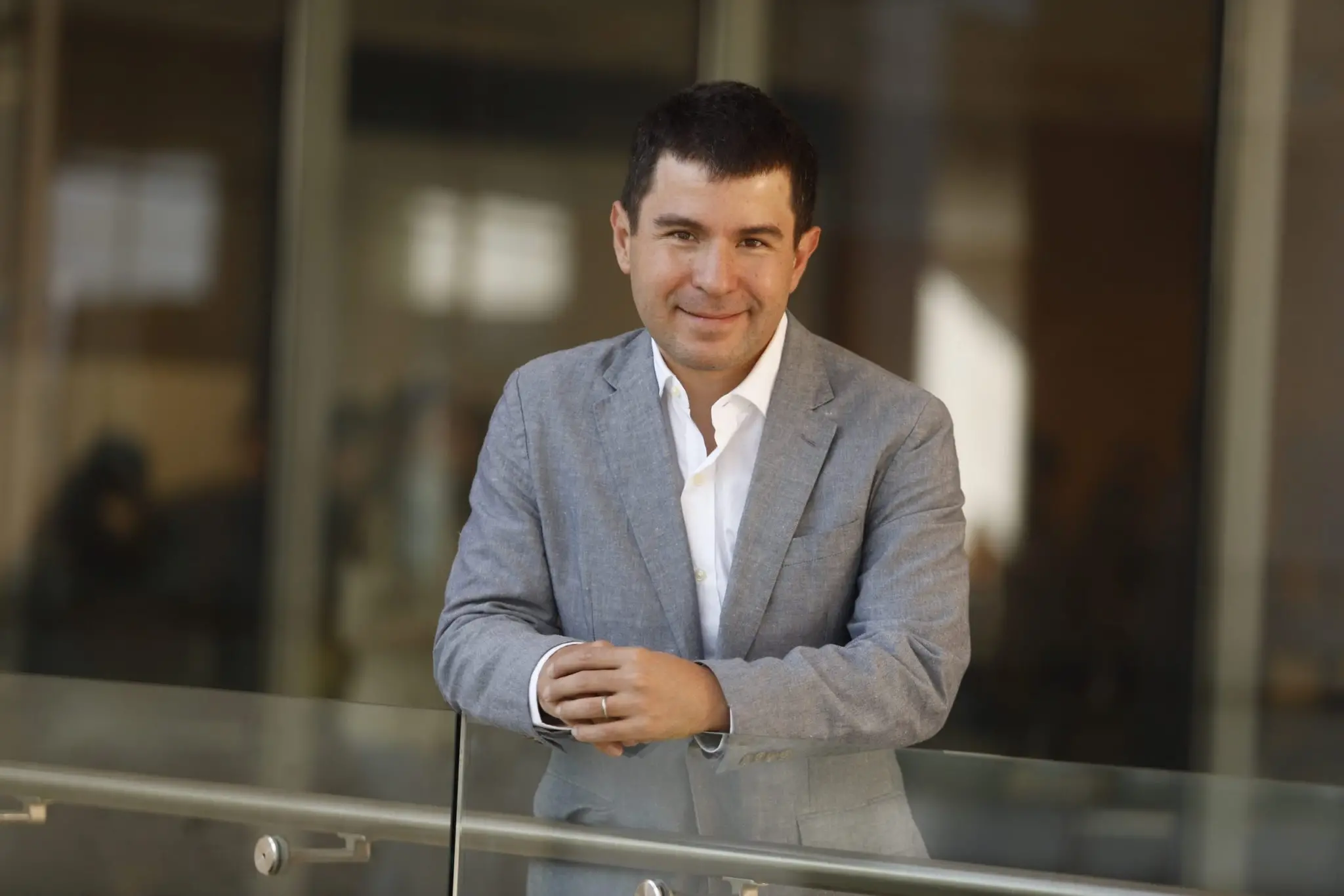
Andrés Barrios, Associate Professor at the School of Business and Economics and Director of the Human Development Lab, has been awarded a Fondecyt Regular Grant for 2026. The project contributes to ongoing efforts to better understand unequal access to higher education in Chile and to generate evidence that can inform more inclusive policies and scalable solutions.
Despite the well-documented economic and social returns of higher education, access remains highly stratified. Barrios’ research addresses this challenge by examining why significant gaps persist, even among students with strong academic potential. His work lies at the intersection of labor and public economics, with a particular focus on the economics of education, exploring how family environments and social networks shape human capital investment, inequality, and intergenerational mobility.
“The project seeks to identify the main barriers and frictions faced by young people from vulnerable backgrounds as they transition into higher education, combining two complementary lines of research,” explains Barrios. “Our goal is to better understand the mechanisms behind access gaps in Chile’s higher education system.”
A central contribution of the project is its emphasis on producing rigorous evidence that can be translated into effective, scalable, and cost-efficient public policies. “If we can identify ways to support these students by leveraging the multiplier effects within their social networks, we could significantly expand the reach of these programs, benefiting not only direct participants but also their families and communities,” Barrios emphasizes.
Within this broader framework, the research examines both the expansion of interventions that have already demonstrated positive results and the design of access policies that better reflect the diversity of students’ educational trajectories and social contexts. One focus is on strengthening schools’ internal capacities to support students throughout the transition to higher education. “The idea is for these communities to develop the tools needed to support their students without relying on permanent external assistance,” Barrios notes.
At the same time, the project addresses persistent structural barriers embedded in existing access mechanisms. “Even highly talented students from disadvantaged backgrounds face significant barriers. Gaining a deeper understanding of these mechanisms and designing effective interventions can make a meaningful contribution to social mobility and economic growth in Chile,” he adds.
The project is part of a broader research agenda developed in collaboration with national and international scholars, including Jorge Rodríguez, Professor at the School of Business and Economics and Associate Researcher at the Human Development Lab, as well as Christopher Neilson and Seth Zimmerman from Yale University. “This project contributes to a broader effort to generate evidence that advances a more equitable education system with greater social impact,” Barrios concludes.


