
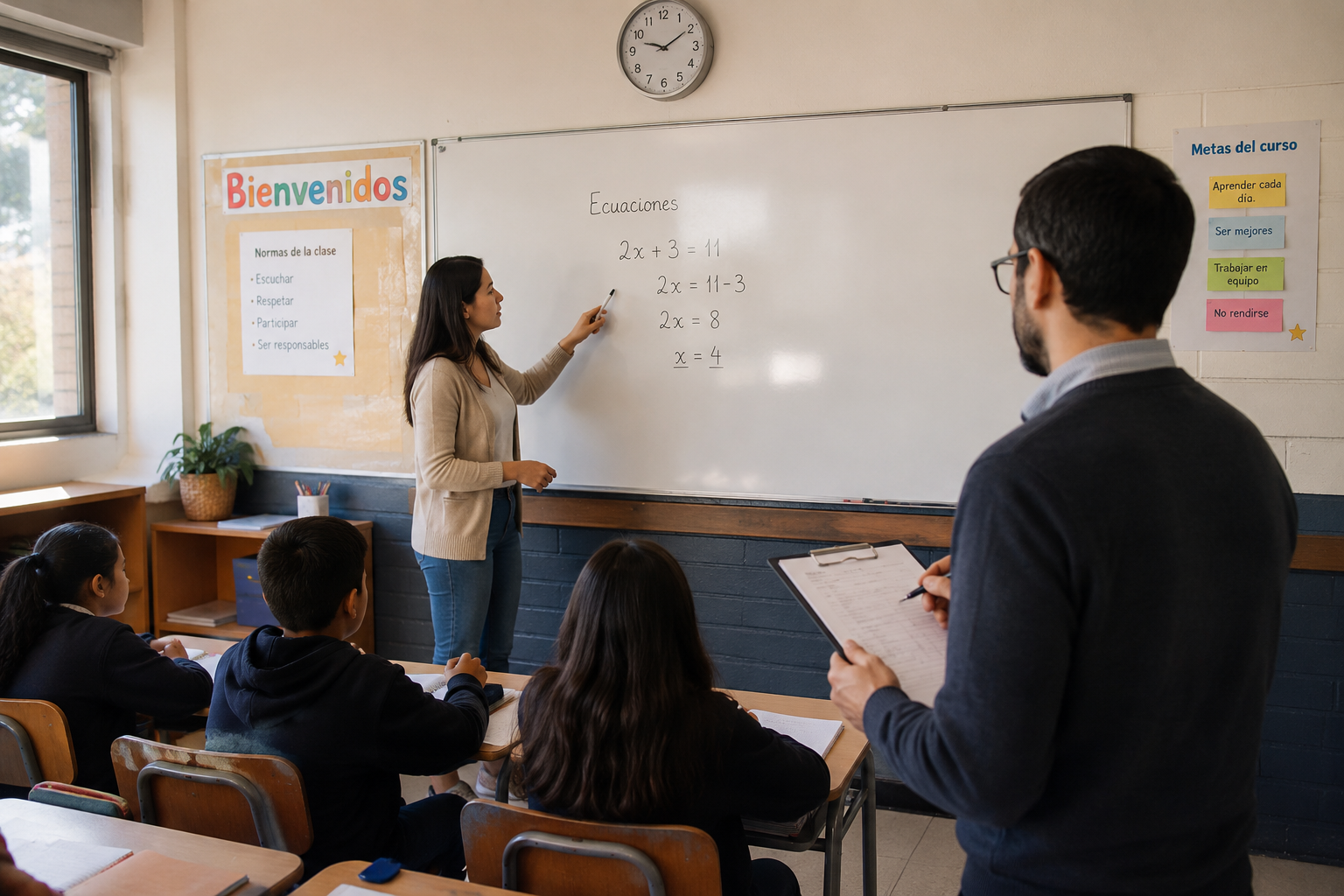
A new academic paper by Jorge Rodríguez, researcher at the Human Development Lab at Universidad de los Andes, has been accepted for publication. The study examines the effects of teacher incentive policies in Chile and their impact on student learning outcomes.
The paper, titled “Getting Teachers Back to Study: Input-Based Teacher Incentives and Student Achievement”, was co-authored with Patricio Araya-Córdova, Dante Contreras, and Paulina Sepúlveda. The research analyzes a Chilean reform that linked teacher compensation to classroom observations and subject-knowledge assessments.
“The idea of this paper is to study the effect that some programs designed to incentivize teachers have,” said Rodríguez.
Using administrative data and a difference-in-differences methodology, the researchers evaluate how these incentives affected both teaching quality and student performance. The findings show that the reform did not generate statistically significant average improvements overall, although positive and meaningful effects emerged for specific groups of teachers.
“What we found is that, on average, there are no visible improvements, but we do find fairly considerable effects,” Rodríguez explained.
According to the study, the strongest impacts were concentrated among teachers facing the highest marginal returns to additional effort under the policy. The authors also developed and estimated a structural model showing that, while the policy’s willingness-to-pay does not fully offset its fiscal costs, adjustments to the incentive structure could lead to meaningful welfare gains.
The paper contributes to current debates on how teacher professional development and performance-based incentives can be more effectively designed to improve both teaching quality and student achievement.


