
In May, researcher Isabella Munevar traveled to Colombia to support the implementation of a new diagnostic survey on school mobility in Bogotá, an initiative that seeks to better understand the daily transportation experiences of students and their families. The project is being developed in collaboration with the district’s education authorities and could play an important role in improving public programs that promote safer and more accessible journeys to school.
During her visit, Munevar worked on finalizing the survey and integrating it into the district’s software system, as well as selecting the schools that will participate in the initial pilot phase. The survey is expected to be first applied to a small group of schools during the first weeks of May, before expanding to all public schools in Bogotá between October and December this year, with support from the Secretaría de Educación Distrital and potentially the Inter-American Development Bank.
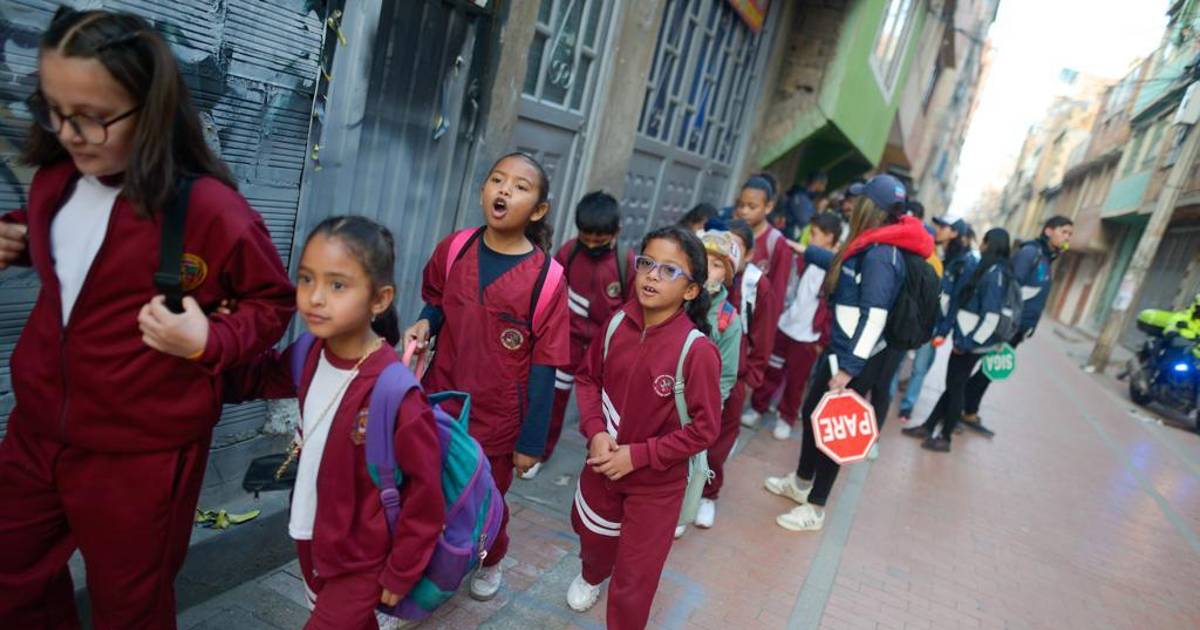
The survey aims to identify how students commute to school, the challenges families face during these trips, their main concerns and fears, and the types of support that could improve their daily experience. The information collected will be used to inform and strengthen programs such as Ciempiés, a public initiative that organizes supervised walking caravans for students on their way to school. Munevar is currently evaluating the program together with her coauthor Rafael Hernández.
Beyond the survey work, the trip also reinforced ongoing collaboration between researchers and public institutions. In December 2025, Munevar led a short course on impact evaluation for teams from Bogotá’s education and mobility secretariats. The course focused on building technical capacity around causal evaluation methods, the role of randomization in public policy, ethical considerations in program evaluation, and the use of rigorous evidence to improve policy design and implementation.
The initiative is also beginning to expand beyond Colombia. The research team is currently preparing to test Ciempiés in Santiago through an initial pilot in one school. The goal is to understand how the model operates in the Chilean context before scaling it to a broader pilot involving 10 to 15 municipal or subsidized schools.
By combining rigorous evidence, collaboration with public institutions, and practical interventions focused on students’ wellbeing, the project highlights how research can contribute to improving both educational access and everyday quality of life for families.


