
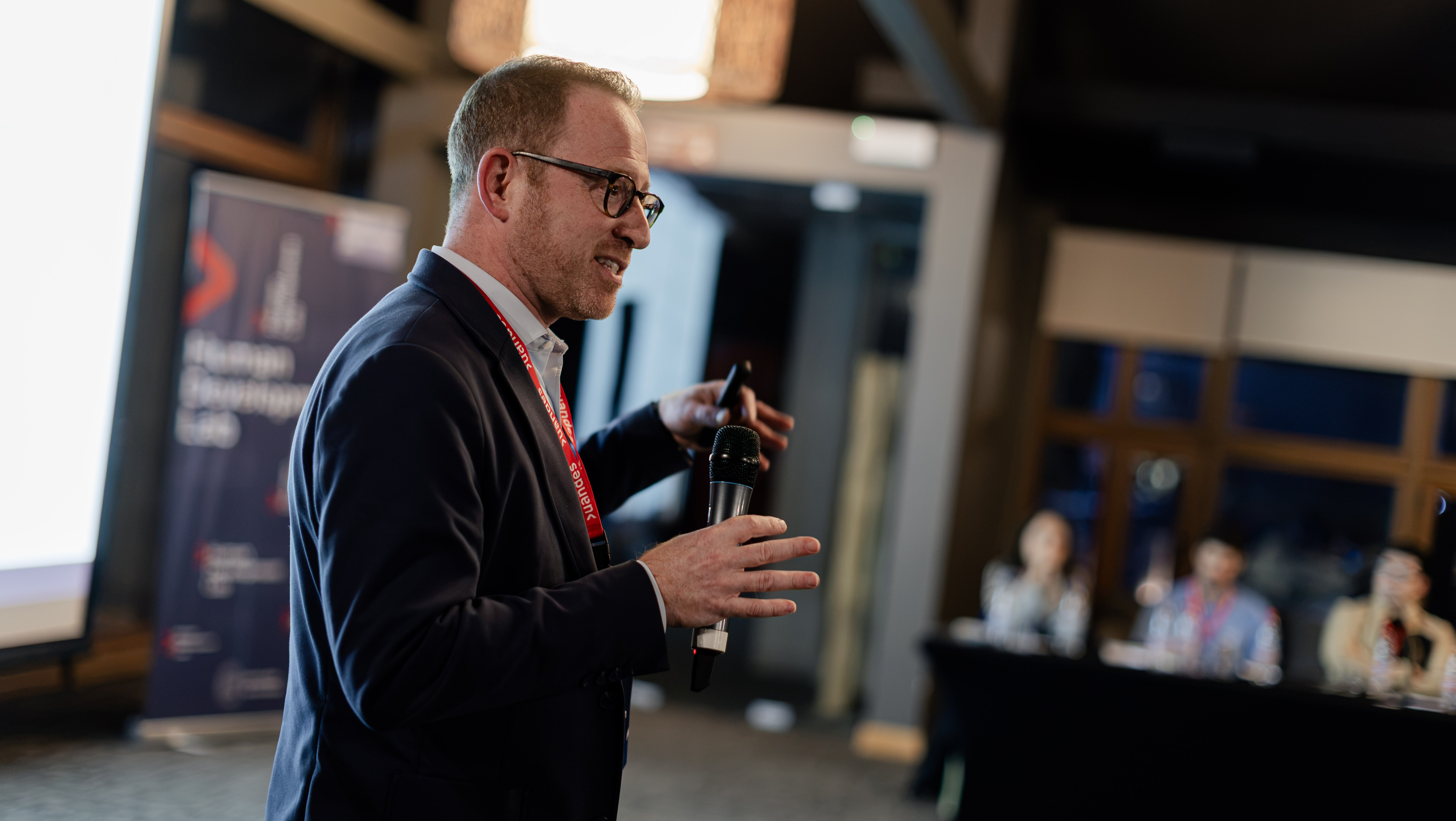
The Human Development Lab at Universidad de los Andes successfully hosted the 4th Workshop on the Economics of Education, held from August 18 to 21, 2026, bringing together researchers from universities and international organizations in Chile and abroad for several days of academic exchange in Valle Nevado, Chile.
Alongside the formal academic program, the setting in Valle Nevado provided opportunities for participants to exchange ideas, discuss ongoing projects, and strengthen research connections across institutions and countries.
A central part of the workshop was its two keynote presentations. Joshua Goodman explored how environmental conditions and school infrastructure shape student learning, while Christopher Neilson examined how education reforms aimed at reducing inequality interact with the decisions of families and schools.
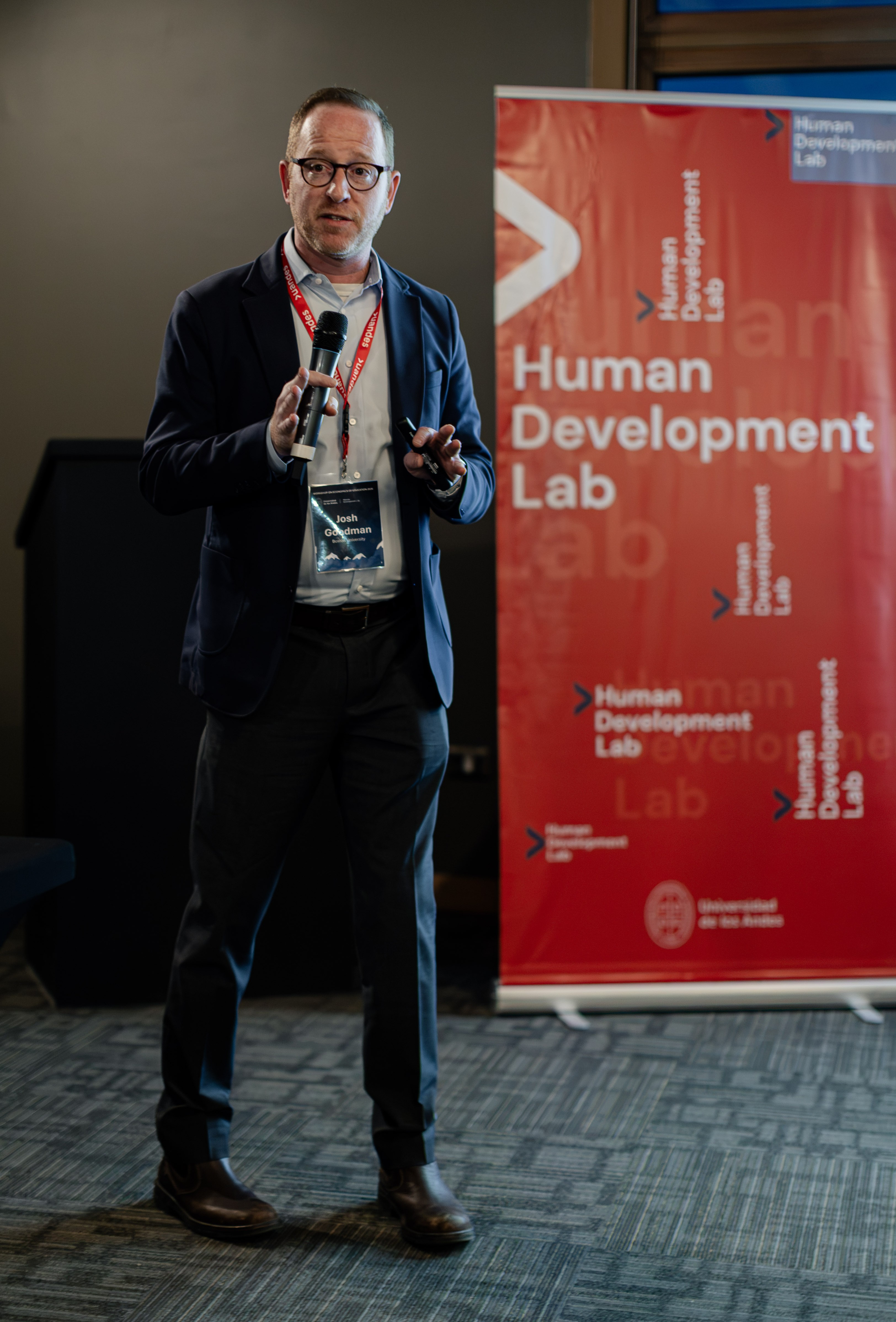
Joshua Goodman, Professor of Education and Economics at Boston University, delivered the first keynote, “Something in the Air: Environmental Conditions, Student Learning, and School Infrastructure.”
Goodman presented research on how heat, air pollution, and school infrastructure affect educational outcomes, with particular attention to their impact on disadvantaged students.
The keynote placed these findings within a broader discussion of how climate and environmental conditions may increasingly interact with education policy and human capital accumulation.
Christopher Neilson, Professor of Economics and Global Affairs at Yale University, delivered the workshop’s second keynote, “Reducing Inequality in Access to Quality Education: Two Chilean Reforms and the Equilibrium Effects that Determined Their Impact.”
Neilson examined two major reforms in Chilean education—the Preferential School Subsidy (SEP) and the Inclusion Law and School Admission System (SAE)—and how each sought to reduce inequality in access to education and, importantly, to high-quality education.
A central theme of the presentation was that education policies cannot be evaluated only through their direct effects. Changes in subsidies, admissions rules, or school regulation also alter the decisions made by families and schools, producing equilibrium responses that ultimately determine who attends which schools, what schools provide, and how students learn.
His presentation highlighted the importance of considering both the demand and supply sides of education markets when designing and evaluating policies intended to expand educational opportunity.
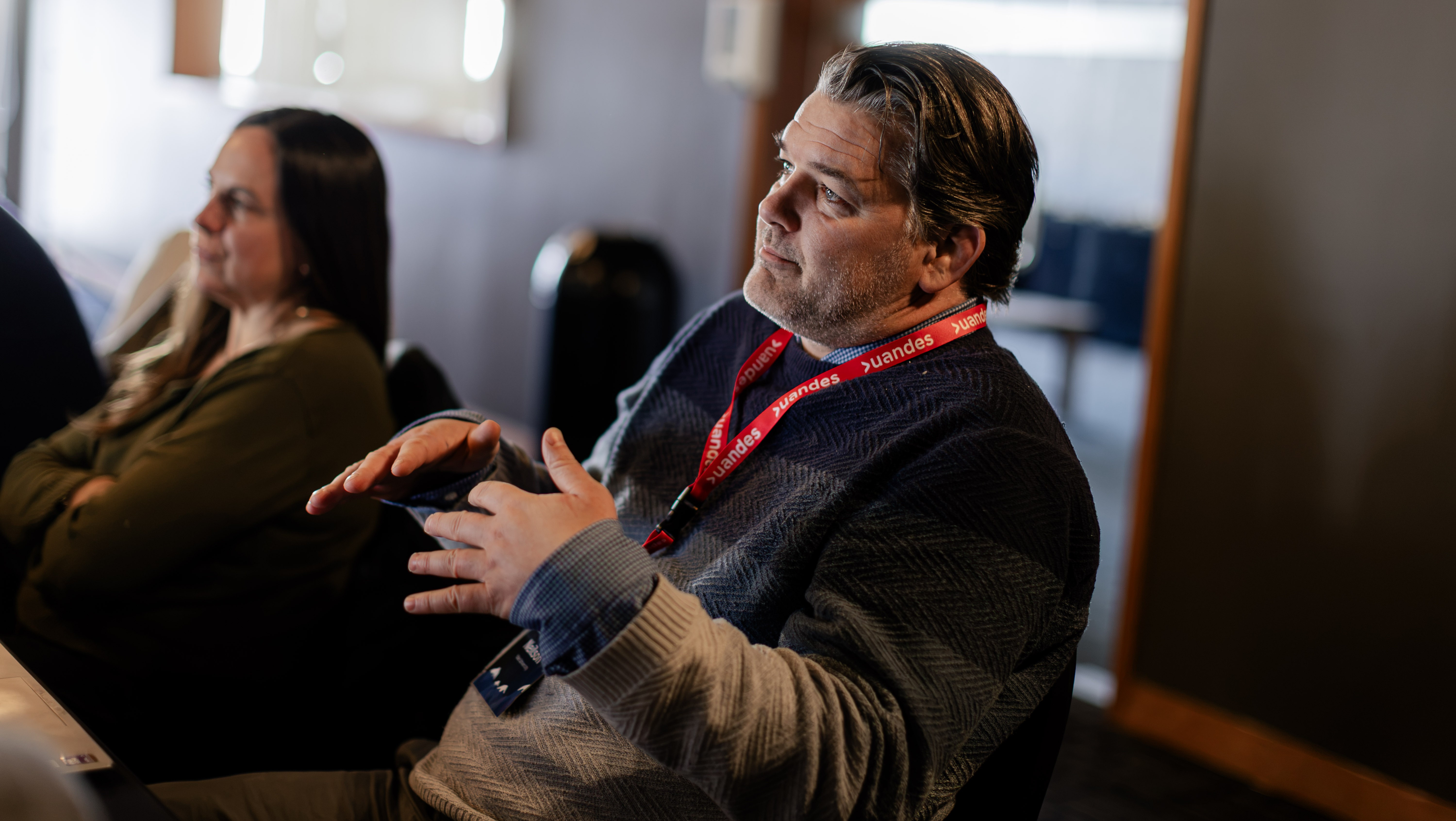
Beyond the keynote presentations, the workshop featured five research sessions covering a broad range of questions in education and human development.
The papers examined topics ranging from how families choose schools and how admissions systems shape educational opportunities, to the effects of financial aid and affirmative action in higher education. Other presentations explored teacher training, study habits, university admissions, generative artificial intelligence, educational curricula, and the relationship between schooling and longer-term civic and political outcomes.
Together, the sessions reflected the wide range of methods and research questions currently shaping the economics of education, while providing presenters with an opportunity to receive feedback from researchers working across different institutional and country contexts.
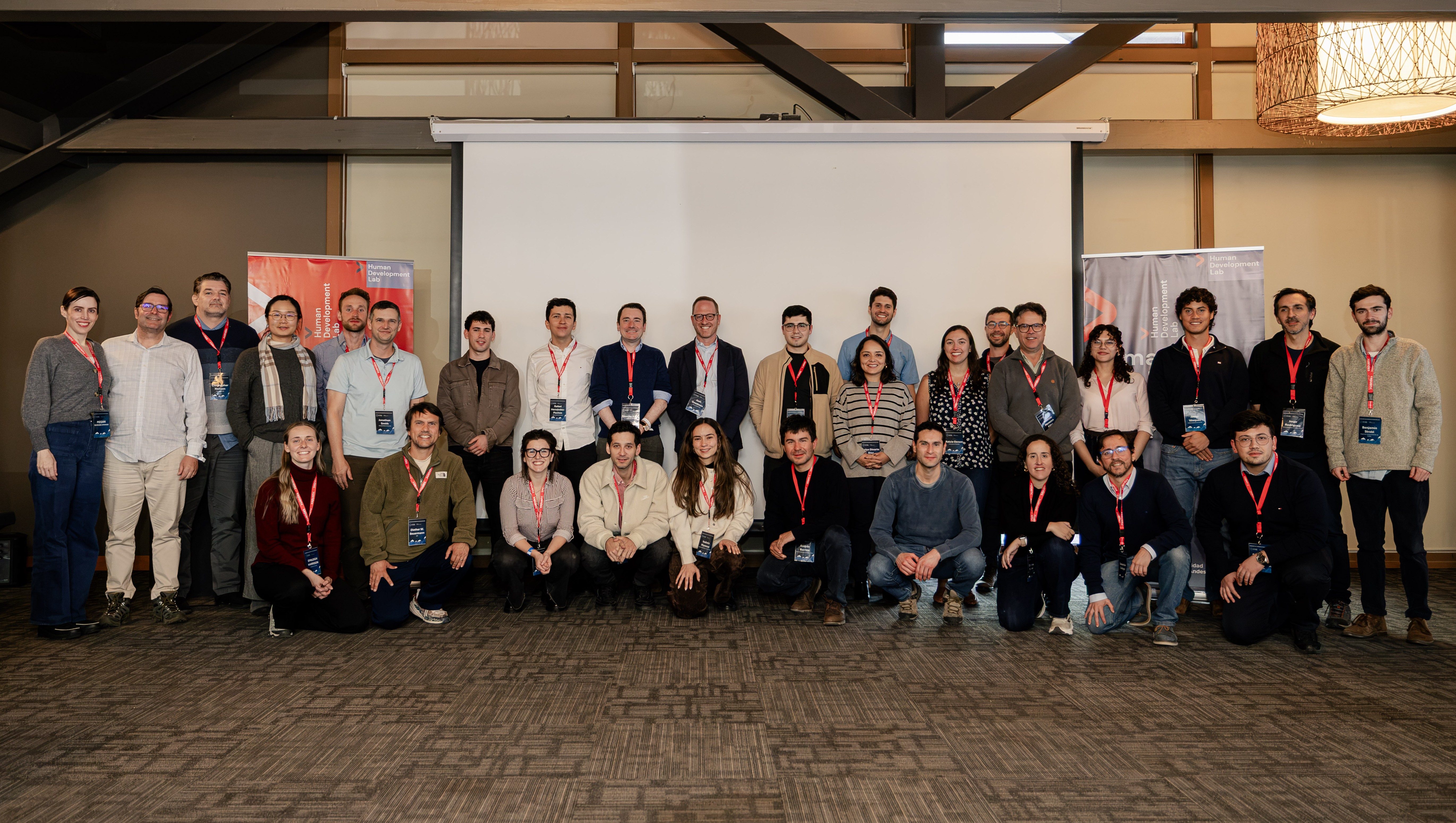
The five research sessions included the following presentations:
Through the annual Workshop on the Economics of Education, the Human Development Lab seeks to provide a space where researchers can present new work, receive detailed feedback, exchange ideas, and develop collaborations around questions related to education and human development.
The 2026 edition continued this effort by bringing together researchers working across different countries, institutions, and areas of the economics of education, combining rigorous academic discussion with the opportunity for sustained interaction in Valle Nevado.


