Programs that show results in education often struggle to reach more students. At the latest Policy Panel of the series “Chile en Construcción: Debates para el Futuro,” representatives of the State, foundations, and the private sector discussed what it takes to make collaboration work, and how to scale up what works.
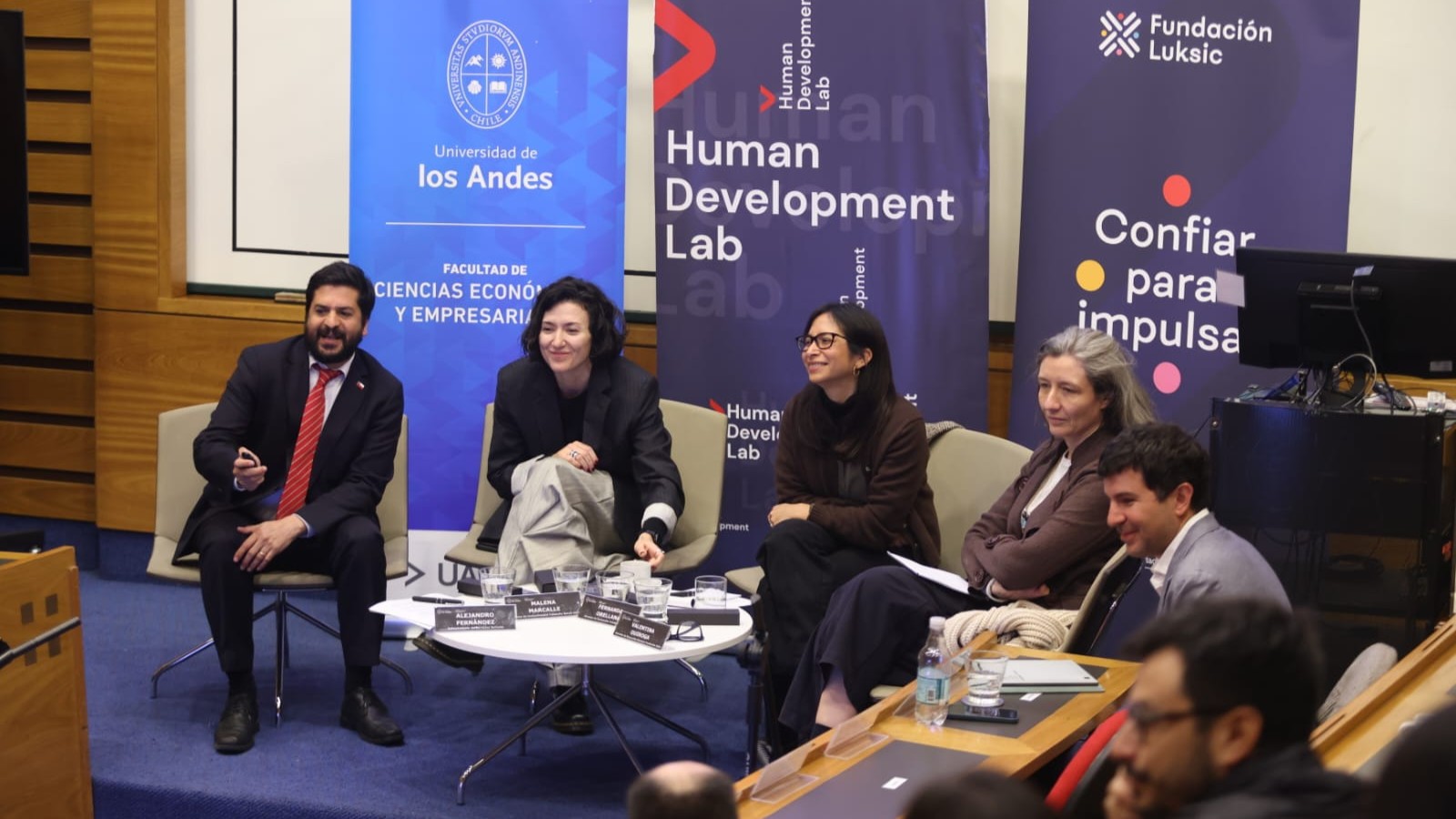
The Human Development Lab at Universidad de los Andes held a new Policy Panel on October 7, titled “Sociedad civil y mundo público: ¿cómo potenciar su colaboración para una mejor educación?” The event was organized by the Human Development Lab and the Faculty of Economics and Business of the Universidad de los Andes, in collaboration with Fundación Luksic and with the support of Falabella through its Haciendo Escuela program.
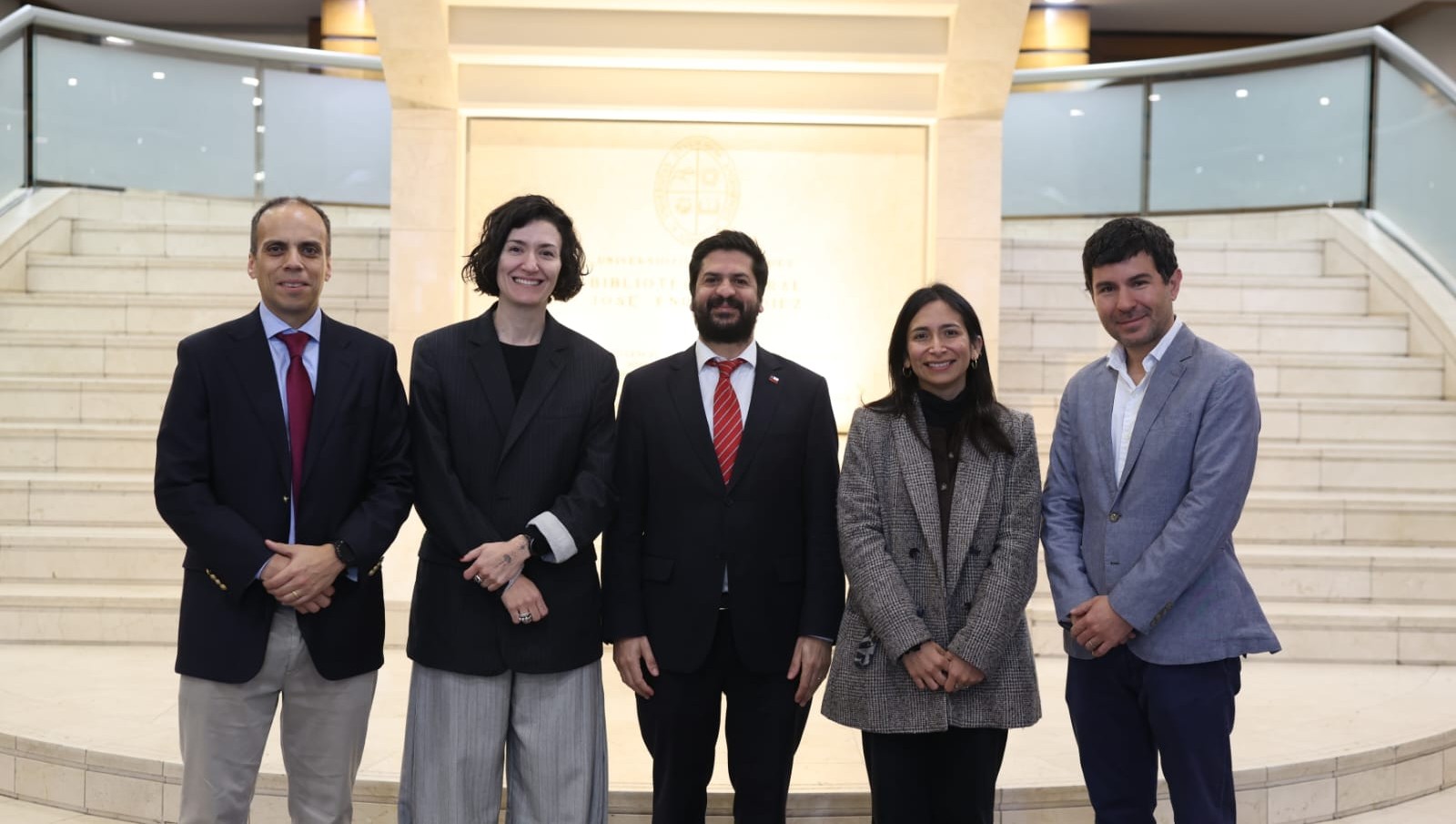
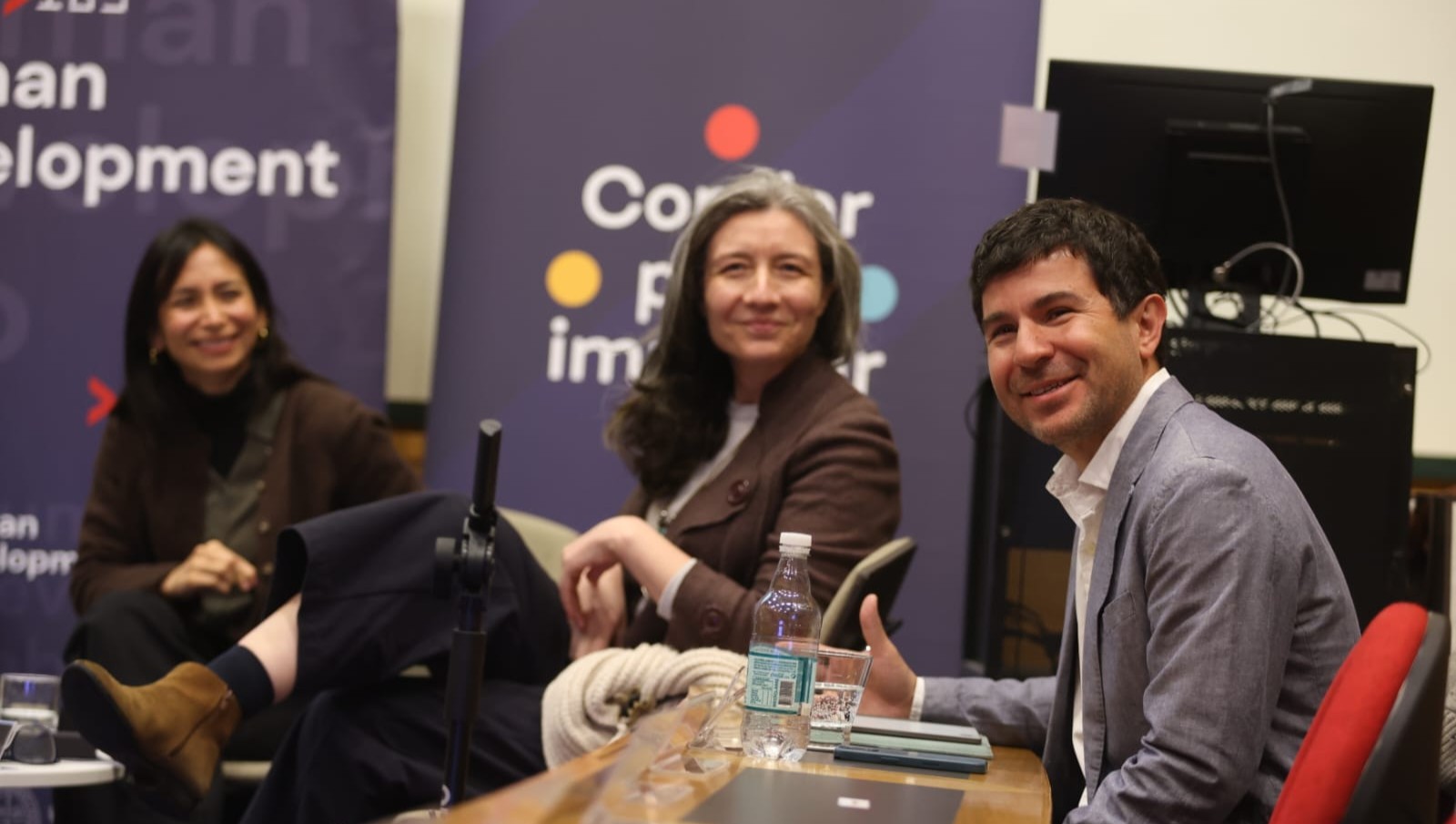
The panel brought together Alejandro Fernández, Undersecretary of Social Services; María Fernanda Orellana, Training Manager at Fundación Luksic; Malena Marcalle, Sustainability Manager at Falabella Retail Chile; and Valentina Quiroga, Human Development Manager at Fundación Chile. The discussion was moderated by Andrés Barrios, Director of the Human Development Lab.
Each panelist approached the question from the perspective of their own institution. The conversation returned to a shared challenge: how to expand initiatives that work without losing the elements that made them effective, and how to coordinate the different actors involved.
Alejandro Fernández opened the discussion by arguing that the State cannot address social problems alone, and that companies, foundations, and universities are part of the ecosystem needed to tackle them.
His presentation began with a reflection on what education is for. Beyond contents such as mathematics, language, or science, he argued, education should help children develop habits and responsibility, self-esteem, confidence in their abilities, motivation, expectations for the future, and the skills to relate to others. For all of these, he said, bonds are fundamental: a child hardly develops confidence if nobody trusts them, or learns habits if no adults transmit and sustain them.
From this, Fernández placed the family at the center. Families are not passive beneficiaries of education policy but part of the solution, and strengthening their capacities means ensuring material conditions, relational capacities, and tools to raise, accompany, and support their children’s development. He described two lines of work at the Ministry of Social Development and Family:
On collaboration, Fernández stressed that civil society contributes closeness, trust, territorial knowledge, and innovation. He identified four challenges: incorporating collaboration from the design stage, reducing barriers to collaborate, connecting evidence with public policy, and amplifying the impact of successful social initiatives.
María Fernanda Orellana presented Aspiraciones, Fundación Luksic’s program for students in technical-professional secondary education, which has the sponsorship of the Ministry of Education. The program combines two components: a personalized information set with a report for each school, and mentoring.
She highlighted an impact evaluation of the in-person mentoring combined with information (Barrios, Eluchans, and Ramírez). The evaluation found that the program increased the probability that students register for the PAES by 13 percentage points and the probability of applying for financial aid by 10 percentage points. It also increased the probability of entering higher education by 5 percentage points, and by 8 percentage points when considering entry within two years of graduating.
Once the impact was proven, a new question emerged: how to reach more students without making the cost of growth unaffordable? Orellana described the versions of mentoring the foundation has tested so far: in-person mentoring, training for teachers and school counselors, mentoring by volunteer university students, online mentoring via WhatsApp, and an artificial-intelligence channel to answer questions about programs, institutions, and financial aid. The goal is to find more cost-effective alternatives while preserving what made the original model work.
Her conclusions on collaboration were that it requires a shared purpose, common standards, time and resources, and sustained trust. As her final slide put it, trust between the State and civil society is not declared, it is built with results.
Malena Marcalle presented Haciendo Escuela, Falabella’s program, which has been working for 57 years to improve learning in schools in vulnerable contexts. Today it works with 53 schools and more than 30,000 students, with 45 committed stores and 15 specialized institutions that implement and evaluate the programs. Its model links each school with a Falabella store in its community, adding the technical support of external organizations. The program focuses on literacy, mathematics, socio-emotional development, school leadership, and corporate volunteering.
Marcalle emphasized the role of continuous measurement, not merely as a way to report figures, but as a tool to learn during implementation, detect where changes are needed, and adjust programs to the needs of each school. Among the results she presented:
For Marcalle, collaborating better is not about adding actors, but about agreeing on a common problem, defining clear roles, sharing evidence, and learning together, making the most of what each sector contributes: schools and communities know their reality; foundations and expert institutions provide technical knowledge; companies contribute resources, management, and continuity; and the public sector and academia provide scale and evidence.
Valentina Quiroga proposed a shift from coordinating actors to orchestrating capacities. In her view, the first question should not be “who do we partner with?” but what problem do we want to solve, and why does it require collective action? Success, she argued, should be judged by the change produced on the challenge, not by the mere existence or harmony of the partnership.
She also argued that diversity creates value only when it becomes complementarity: the State contributes regulation, scale, and legitimacy; civil society, innovation, speed, and territorial knowledge; and academia, research and knowledge. In turn, a common purpose does not mean identical interests. Partnerships last when each actor can explain how taking part also contributes to its own mission.
Quiroga stressed that partnerships need architecture, including governance and roles, shared expectations and a common language, coordination, information sharing, metrics and early wins, and mechanisms to resolve conflicts. Fundación Chile’s hypothesis, she said, is that in many partnerships the scarce asset is not the partners or the resources, but the capacity to orchestrate.
She illustrated this with Sumar Saberes, a public-private alliance chaired by the Ministry of Education that seeks to identify initiatives that are improving learning in different parts of the country, understand why they work, and support their scale-up. The alliance took between seven and eight months to agree on what it would consider an “effective” initiative. For Quiroga, before thinking about expanding a solution, it is necessary to establish clearly what is working, how it will be verified, and which conditions would allow it to be replicated elsewhere.
Although each panelist spoke from a different place, the discussion pointed to common ideas: collaboration starts from a shared problem, depends on clear roles and common standards, requires evidence both to know what works and to decide what to scale, and is sustained over time through trust built on results.
Through its Policy Panel series, the Human Development Lab seeks to create spaces where researchers, policymakers, and leaders from the public, private, and non-profit sectors can discuss how to address Chile’s main educational and social challenges.